THE WORLD
Culture Shock: Americans teaching abroad
Review of a book, "Innocents Abroad: American Teachers in the American Century". Raises the dilemma faced by "human rights"-focused teachers arriving to work in cultures where CP is "expected and effective". "False conceptions of culture often don't last long abroad."
False Promises [PDF]
From the World Family Policy Forum 2001, this essay on the UN Convention on the Rights of the Child explains that the convention itself is largely fine; the problem is the way it is being interpreted by the wholly unelected and unaccountable UN Committee on the Rights of the Child.
For instance, this committee has taken it upon itself to decide that all forms of corporal punishment, however reasonable and moderate, and even if given by the child's own parents, contravene the Convention's rule against "physical and mental violence".
And yet the Convention itself nowhere mentions corporal punishment, and it is plain that such an interpretation was not in the minds of its drafters, and is not what the signatory nations thought they were signing up to.
Oldest spanked or given school detention
Discussion on a message board about school students given CP at an unusually high age. According to this, the record in real life -- as opposed to actors in films -- seems to be held by two 21-year-olds in Australia, caned in 1981 (and on their hands, too, always a foolish policy in my view, but which seems particularly ridiculous at that age).
However, we shouldn't forget the true story of an undercover drug cop who got paddled at a Dallas high school in 1989. He spent four months at the school posing as a student, and had to take the paddling so as not to blow his cover; but he was actually aged 25!
 Unruly Classrooms
Half-baked document (Jan 2000) from Unesco about the worldwide collapse in school behaviour. It quotes, with apparent approval, a teacher who says "We've switched suddenly from a system based on prohibitions and punishment to one based on sharing where the most important thing is agreement between everyone involved in the education system and we've not yet learned how to put that new system into practice" -- which is one way of putting it, I suppose. Background interest only -- there is nothing specifically about corporal punishment proper.
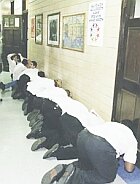
However, there is a photo of "14 boys being punished in a corridor" in a school in Illinois, USA. The boys have been made to kneel in a row with their heads to the floor and their backsides in the air. How is this -- which, it seems, is OK with Unesco -- any less degrading (etc. etc.) than privately paddling them, which is not allowed in Illinois?
 Version française du document ("Zéro de conduite").
 Versión española del documento ("Cero en conducta").
A Study of Attitudes Towards Corporal Punishment as an Educational Procedure From the Earliest Times to the Present
This is an enormous document, really an online book. It was written as a university thesis in 1971 but only saw the light of day in 1999. One advantage of this is that it does not suffer from the distorting politically-correct perspective of everything published today. The author, Robert McCole Wilson, wrote a new Afterword for the 1999 online edition.
Global Partnership to End Violence Against Children (GPTEVAC, formerly GITEACPOC)
A lobby group to support efforts by the UN Committee on the Rights of the Child to nag all the countries in the world into abolishing CP. The UN Convention on the Rights of the Child nowhere mentions corporal punishment; the Committee's decision to construe the language of the Convention as banning CP has, as far as I am aware, not been tested in any court of law, still less put to a vote by any democratic body. There is in any case no legal machinery to enforce the Convention. It is not a binding treaty like the European Human Rights Convention, with its own proper court to decide on specific cases which is made up of actual judges from the signatory states (whatever you may think of their decisions). I suspect GPTEVAC hopes that people will just assume that it is that kind of body. In reality, these busybodies who don't represent anyone except themselves can only keep on nagging. Nobody need pay any attention.
Should corporal punishment be banned?
A BBC News Online "Talking Point" forum from September 1999, in the wake of the Human Rights Watch report on Kenya.
 Talking Point: Child Discipline
Links to several "conversations" about CP in spring 2001 on yet another BBC website. There is a cartoon of an over-the-knee spanking in progress.
Human Rights: The Caning Backlash
Article (1997) from Hinduism Today about school corporal punishment in various countries, including Malaysia and the UK.
 ARGENTINA
 St. Alban's College, Buenos Aires
A 1954 leaver writes that this school was largely ruled by fear. As well as the cane there was something called a "paleta bat". Prefects were allowed to give CP.
 AUSTRALIA
State Records NSW -- Punishment at School
Extracts from a punishment book in the 1880s.
Vaucluse Boys' High School - Punishment Book
Images of pages from a punishment book in the 1960s and 1970s. Since this is in New South Wales, the canings would presumably have been on the hand. Recipients age from 13 to 17, and strokes are from 1 to 6.
Stirring (1974)
Synopsis of a "provocative" film set in an "authoritarian" boys' high school in Sydney and made to "demonstrate how a teacher approaches the controversial issue of the use of corporal punishment in schools". There are stills from the film.
Lee Street School: Chapter 3 -- Slates and Cane
The story of a school in Melbourne. In 1875 the chief disciplinary method was the cane, "meted out to the hind quarters", but by 1907 a strap was also in use. The headmaster from 1939 to 1950 was also noted for giving "six of the best".
Goodbye The Cane
Extremely long thread on a message board including (amidst a certain amount of nonsense) some evidently well-researched material about CP in schools in Victoria, particularly in the contributions by "Dean".
Guildford Grammar School, Western Australia
A huge collection of detailed caning anecdotes taken from a book about this private boys' school, dating from 1912 to 1975.
The Blessed Birch
Message board quotes a Sydney Morning Herald piece from 1983 about a row over a role-playing lesson on courts and human rights, in which a rolled-up newspaper is substituted for a birch. The ensuing long discussion broadens out to cover school CP more generally.
 More School History (long!)
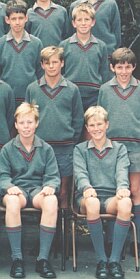
Interesting extracts from the histories of various Australian private schools as regards corporal punishment.
Have Children's Rights Gone Too Far?
Transcript of a silly TV discussion (2002) in which, as usual, there are far too many guests and far too little time for any of them to get their points across. Two of the speakers are Frank Dando, headmaster of the eponymous Sports Academy, one of the few schools in Australia still then using CP, and an 11-year-old student at the school, who had been at the receiving end of Frank's whackings.
The Punishment Book 1920-21
A primary school in New South Wales shows an extract from its punishment book and quotes the rules for the use of CP.
Children on the goldfields [PDF]
Mentions CP at temporary state schools in the goldfields, including a humorous anecdote about mothers who whipped a teacher who had beaten a small boy.
Joint Standing Committee on Treaties: Canberra, 28 April 1997 [PDF]
Joint Standing Committee on Treaties: Brisbane, 1 May 1997 [PDF]
Joint Standing Committee on Treaties: Sydney, 9 May 1997 [PDF]
Joint Standing Committee on Treaties: Canberra, 16 June 1997 [PDF]
Joint Standing Committee on Treaties: Perth, 3 July 1997 [PDF]
Joint Standing Committee on Treaties: Adelaide, 4 July 1997 [PDF]
Joint Standing Committee on Treaties: Melbourne, 9 July 1997 [PDF]
Joint Standing Committee on Treaties: Sydney, 5 August 1997 [PDF]
Joint Standing Committee on Treaties: Brisbane, 6 August 1997 [PDF]
Joint Standing Committee on Treaties: Canberra, 3 September 1997 [PDF]
Verbatim reports of hearings to investigate the effect on Australian legislation of the UN Convention on the Rights of the Child and -- among many other things -- whether it could be held to outlaw corporal punishment, either at school or in the home. Unless you really want to plough all the way through these long documents, use the Acrobat search facility to look for references to 'corporal punishment'.
UN Convention on the Rights of the Child: Executive Summary [PDF]
The above hearings culminated in this final report by the Parliament joint committee. It concludes that there should be no federal-level intervention in the matter of corporal punishment in schools. Nor does it support legislation banning parents from administering reasonable chastisement.
ACT Hansard May 1997
Debate in the state parliament of the Australian Capital Territory (Canberra) on legislation to abolish school corporal punishment. The Minister stated that it had already fallen out of use in government schools (in 1987) and in the Anglican and Catholic schools, so the proposal was in his view unnecessary.
Open Letter of Protest ... Dover Heights Boys' High School
Story of a 1970s fuss over caning in NSW.
More information and links for School CP in Australia: see Country files.
 THE BAHAMAS
See Country files.
 BARBADOS
Night That Brought Back Old Days
Information about floggings at Harrison College 30 years ago.
More information and links for School CP in Barbados: see Country files.
 BELIZE
25 Years Ago on Ambergris Caye: Discipline
Describes past school paddlings in this small Central American country (formerly British Honduras).
More information and links for School CP in Belize: see Country files.
 BOTSWANA
Corporal punishment in schools under spotlight
Local newspaper article (2003). As too often in Africa, some of the cases quoted here go way beyond anything that could be described as reasonable corporal punishment.
More information and links for School CP in Botswana: see Country files.
 CANADA
 Happiness and a Hickory Stick
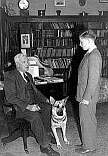
Article from Time Magazine in 1947 about Shawnigan Lake School in British Columbia, a private boys' boarding school run on strict lines with "iron discipline" by its English headmaster, who is pictured in his office with a student. It was in this office that boys guilty of "serious offenses" were caned, the text tells us. On another page that now seems to have disappeared, a former student wrote that the photo "was obviously posed as if it had been true to life the ... boy would have been bending over [the] big chair with his coat tails up".
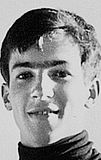 Boy wonders
Peter Ladner, a candidate for the post of Mayor of Vancouver, attended, and was caned at, Shawnigan Lake boarding school (see previous item) in the 1960s, according to this 2008 piece in the Vancouver Courier. In 1966 he became Head Boy, and was then himself empowered to administer CP.
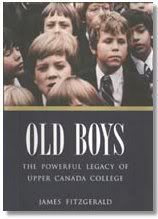 Old Boys: The Powerful Legacy of Upper Canada College
Extracts from a book of reminiscences about this elite private school in Toronto. From the 1920s up to 1972, a lot of boys got caned. Says one old boy: "I used to charge people a quarter to see the marks on my ass ... The prefects were allowed to give a maximum of six whacks, the masters eight ... we used to order our canes especially from England".
The Myths of Upper Canada College
Unfavourable review of the above book by another Old Boy of the school (who says he was not caned even once). According to this, the book gives a false impression by virtue of those chosen to contribute and the editing of their remarks. Allegedly, the author actually interviewed 300 old boys but only used the testimony of 71 of them.
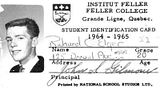 Pranks (Alternative link)
Teachers (Alternative link)
Snippets of Stuff and Half Forgotten Memories (Alternative link)
Don Ferguson's Feller Memories (Alternative link)
Here is a sample of messages I have received from Feller ex-students (Alternative link)
The strap (Alternative link)
Bruce Pettinger's memories of Feller (Alternative link)
1960s recollections of Feller College, a co-educational, bilingual boarding school near Montreal until its closure in 1967. Girls and boys alike got the strap ("getting biffed") on their hands; one contributor says he "probably averaged a strapping once a week". But also, boys were "liberally" caned on their bare bottoms in the office of one particular housemaster. Another had a paddle, which left one recipient's backside "red, warm and smarting for the rest of that day and into the next one". And this was nothing to do with any British cultural heritage, or with Québecois Catholicism: the school was founded and run by French-speaking Swiss Protestants.
Renaissance Man has Gift for Swash 'n' Buckle
Artist and film actor Duncan "Zorro" Regehr (b. 1952), who grew up in British Columbia, says he got caned across the backside for painting a nude picture of a girl in his class.
Forms of Punishment in the Canadian Public School System
Article from mid-2002, when CP was still available in some schools in Alberta and one or two other places, but it refers to it entirely in the past tense. Also surprising is that the author says it included whacking on backsides with a paddle as well as on hands with a strap. It was not common, he says, since the threat of being strapped or paddled was usually enough to keep students in line.
This Hurts Me More Than You
The writer of a "token man" column in The Woman's Quarterly thinks that something important was lost when the strap went out of fashion.
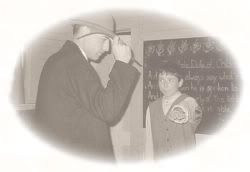 1898: A moment in time: Rules and Punishment
Part of a site for kids showing what it was like at school in British Columbia 100 years ago. This (presumably posed) picture shows a child being strapped on the hand.
Why Bring Back the Belt?
A school student in Saskatchewan says (2002) she would refuse to go to school if there were corporal punishment.
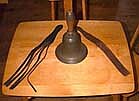 Kensington Schools 1794-1955
In Kensington, Prince Edward Island, the first proper school was built in 1847. Here is a photograph of the punishment straps used (when you get to the page, click on the small image to show an enlargement).
Section 43 - Inquiry - Debate continued
Senate debate of November 1996 on (mainly school but also parental) corporal punishment.
Saskatchewan poll results released
52 per cent of those interviewed in this province in April 1997 thought teachers should be allowed to use corporal punishment.
More information and links for School CP in Canada: see Country files.
 CAYMAN ISLANDS
Discipline begins in the home
Editorial (Dec 2005) in the Caymanian Compass complains that, with CP no longer fashionable in schools, "educators are forced to suspend students who, more often than not, spend their time out of school in front of a television or computer or turn to crime".
 CHINA incl. Tibet
Government of Tibet in Exile
Account of discrimination against Tibetans by the occupying Chinese. Teachers beat the Tibetan students even though corporal punishment is supposed to be illegal in China.
Beatings are nothing new
Letter in the Taipei Times (January 2000) alleges that the corporal punishment of Tibetan student monks has always been common and predates the Chinese invasion.
More information and links for CP in China: see Country files.
 CROATIA
Croatia: being taught to hate
Part of a site about discrimination against the Roma people. Shows a picture of a schoolboy who was "corporally punished", but it turns out from the text that the teacher had banged his head against the wall, which of course is not "corporal punishment" at all but disgraceful brutality.
 DENMARK
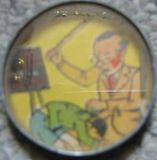 Rattan cane game, 1930
A children's toy from 1930 shows a teacher caning a bending boy, implying that this would have been a familiar concept in Denmark at that time.
The little prince
This article about Hans Christian Andersen (b. 1805) states that his mother managed to persuade his school that he was not to be birched, as though he were a member of royalty.
 EGYPT
EGYPT
Mr. Beard
6 of the best
Nostalgia
Mr Beard
Reminiscences of bare-bottom canings on a message board for alumni of the English School, Cairo, in the 1950s.
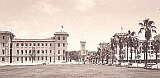 Victoria College 1902-1956: Educating the Elite
History of a British-style boarding school in Alexandria. Caning (no details given) was "de rigueur".
EUROPE (Mediaeval)
Medieval Technology and Everyday Life
Shows a drawing from about 1445 of a schoolboy being punished in class.
 FIJI
FIJI
Address at the opening of the computer laboratory
The Prime Minister, addressing his old school in 2001, recalls getting "a very sore backside" after receiving the qanuya, a supple reed cane.
More information and links for school CP in Fiji: see Country files.
FRANCE
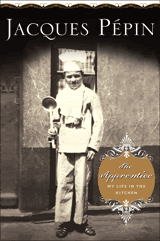 The Apprentice: My Life in the Kitchen
Excerpt from the biography of Jacques Pépin, a French chef born in 1935. He writes that at Lycée St Louis, a Jesuit boarding school in Bourg-en-Bresse, "corporal punishment was swift, certain and harsh" and consisted of being smacked hard across the face. (There is a very similar school scene in the 1960 François Truffaut movie Les Quatre Cents Coups.)
More information and links for school CP in France: see Country files.
 GHANA
GHANA
Education and moral development at St. Augustine's College
A former student of this Catholic boys' school in Cape Coast describes the disciplinary regime in the 1970s. Category B offences were punished with one day's internal suspension plus "six hot shots on our buttocks". For the most serious crimes, boys could be given 12 strokes of the cane at assembly.
Sensing danger, headmaster gets tough on indiscipline (10 February 2004)
Discipline on its highest pedestal (2 April 2005)
Students caned on campus (22 June 2005)
Robo is remorseful (15 July 2005)
Rising and falling (July 2005)
Masters regret caning incident (5 September 2005)
These are all pages from the remarkably outspoken students' online newspaper at Prempeh College, a huge boarding school for boys in Kumasi, with numerous references to canings. On 1 April 2005, over 500 students were given six strokes each for not attending roll-call. According to the June 2005 item, CP was previously abolished but then restored; the cane is applied to the offender's back, evidently meaning here the upper back. Students suggest that, if there has to be CP at all, it should be inflicted elsewhere.
The Man who Spanked 6th Formers
More from Prempeh College (see previous items). This is a story from the 1980s.
More information and links for School CP in Ghana: see Country files.
 GUYANA
Why the Motion on Corporal Punishment by the AFC is Harmful for Guyana
Open Letter from a local campaigner to political and social leaders, calling for CP to be retained and accusing its opponents of misrepresentation. Notes that the UN Convention on the Rights of the Child does not mention CP at all.
More information and links for School CP in Guyana: see Country files.
 HAITI
HAITI
Project Teach - Seminar Program
Mentions that corporal punishment is common in Haitian schools, but gives no details.
 HONG KONG
Hong Kong Legislative Council 16 January 1991 [PDF]
Conflicting views by local politicians on the abolition of school CP, which went ahead shortly after this. See pages 34, 35, 64, 77, 83 and 105.
Hong Kong Legislative Council 23 December 1981 [PDF]
In the same forum ten years earlier, questions were raised about alleged excesses. It was clarified that only boys might be caned.
La Salle Primary School Old Boys
At this boys' primary school in Hong Kong, "spanking by cane" by the headmaster was the norm up to the 1970s.
 HUNGARY
Between Two Homelands [DOC]
The writer of this autobiographical diary says that at secondary school in Budapest around 1940 the most common punishment was a caning on the buttocks.
 INDIA
INDIA
Br Eric D'souza was our To Sir with Love
Bollywood actor/producer Shahrukh Khan recalls being caned "every week" at St Columba's, a Catholic school in Delhi, around 1980.
Corporal Punishment in Chennai schools - A study [PDF]
More a rambling collection of poorly-written notes than a proper study, this is published by a local "human rights" body and is accordingly firmly biased against CP.
My School Punishment
An Indian message board for kids, with many hundreds of entries. Numerous references to caning; some of them may be fantasy.
Bishop's School, Pune: Principals
Discipline was strict and corporal punishment was common at this Anglican school in the 1930s and 1940s. Only the headmaster could use the cane. The lampshade in his office was torn, "testifying to the height to which he raised the cane", according to this student's memories.
 Idol Chatter: Salman Khan
Bollywood star Salman Khan says that if he hadn't been spanked and caned by his teachers he wouldn't be where he is today.
When teaching becomes coercive
A series of four articles in The Tribune of Chandigarh. All seem to equate corporal punishment with general brutality. Caning doesn't have to be like that, if the education system is properly run and supervised.
Can't we spare the rod?
Few Indian schools had yet banned corporal punishment when this December 2003 article appeared in The Times of India. But apparently we are talking about teachers "kicking and punching" students and even of one case in which a student was beaten to death. There is major terminological confusion here. These things plainly should not be allowed, but they have nothing to do with corporal punishment as correctly defined and properly administered.
More information and links for School CP in India: see Country files.
 INDONESIA
Indonesian school linked to top terror suspects
Article from The Wall Street Journal (September 2003) about a fundamentalist Islamic school. Mentions that students who miss prayers get 10 strokes of the cane.
 IRAQ
IRAQ
A man ahead of his time
About the chairman of a school board serving the Sephardic community of Baghdad in the 1920s, who made a rule against corporal punishment.
Back in school, Iraqis have a lot of unlearning to do
Article in USA Today (October 2003) mentions that there was still corporal punishment in Iraq's schools, but gives no details.
 IRELAND
The Geldof Story: Day 2
This biography of rock star Bob Geldof briefly mentions regular canings at Blackrock College in Dublin in the 1960s.
Kipperhead: Profile of a Christian Brother
Author Malachi O'Doherty recalls an education dominated by priests wielding straps and canes.
Monastic Ireland: Bangor
At this monastery in ancient times (possibly the sixth century AD but the page isn't very explicit about that), CP was administered to the youngsters with a leather strap on the palm of the hand. This remained an Irish Catholic practice until very recently.
The Corporal Punishment Book
Page from the punishment book of a primary school in Cork, dating from 1911. Recorded punishments were rare, and consisted of "slaps on the hand".
Dr Noel Browne
Credits the legendary doctor-politician with having been instrumental in securing the abolition of school corporal punishment.
More information and links for School CP in Ireland: see Country files.
 JAMAICA
His Story - Cornwall 'old boys' remember Dr Stokes
Affectionate anecdotes about a disciplinarian headmaster.
Kingston, Jamaica
An elderly gentleman recalls being whipped by the headmaster in front of the entire school in about 1950.
 London teachers' Jamaican lessons (Alternative link)
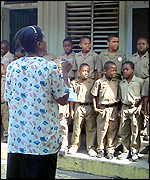
BBC News item from March 2002. London teachers visit Jamaica to learn how to handle Afro-Caribbean boys, who do consistently badly in British schools. The article states that Caribbean schools use the cane, but illicitly. This is incorrect: CP in Jamaica has not been banned, and remains entirely lawful.
A nine-year-old who hates school
Depressing tale from 2001. Refers to "floggings" and "beatings" but it's not clear exactly what is meant. At all events, teachers in Jamaica sound as if they are not always applying CP correctly.
More information and links for School CP in Jamaica: see Country files.
 JAPAN
JAPAN
See Country files.
 JORDAN
Muslim girls struggle for education
In a comment right at the bottom of this BBC page about schooling in the Arab world, a returned Peace Corps Volunteer says that boys in schools in Jordan face corporal punishment on a daily basis.
More information and links for School CP in Jordan: see Country files.
 KAMPUCHEA
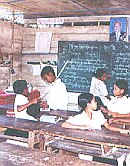 Cambodia
See the bottom picture on the page. It shows a classroom, and one of the students is holding what definitely looks like a cane. The text (in Japanese) doesn't do much to clarify matters, as far as I can work out.
 KENYA
KENYA
Spank the Riotous Devil Out of the Brats!
A short and unusually literate essay lamenting the abolition of school CP in Kenya and claiming that it has led to a spiral of lawlessness in schools. The author criticises Human Rights Watch and similar bodies: their "refusal to distinguish between abusive violence and corrective punishment suggests an inclination to self-serving propaganda rather than a desire to clarify issues. There is an obvious difference between an adult in authority punishing wrong doing and a person indiscriminately beating up another for the purpose of causing injury".
Kenya "SchoolSpeak" (Alternative link)
This glossary of 1940s-1960s Kenyan school slang tells us that "cuts" meant "strokes with a bamboo cane on the backside". Not a usage confined to Kenya, of course. (And I doubt if the canes were actually bamboo, which is too rigid and brittle for punishment purposes; rattan is more likely.)
Declare my wealth? Not me
Writer claims (2006) that at his school the penalty for stealing a school book was 20 strokes of the cane on the backside.
Old Cambrian Society: Prince of Wales School, Nairobi
An expat Brit recalls this school in the 1940s. Prefects were authorised to cane miscreants. Their 'cuts' were thought much harder than those of the headmaster. One teacher used to ask the class how they thought one of their fellows should be punished. "Flog him, sir", they would shout. What larks!
A Headmaster Remembered
More about the Prince of Wales School (see previous item). This is a tribute to its headmaster from 1945 to 1959. "He was deadly accurate with the cane, and often one would see boys cooling their painful posteriors in the washbasins of the toilets just round the corner from his office."
Alistair Robinson: Memories of school
Yet more on the Prince of Wales School (see the two previous items). Includes a description from the 1960s of the daily punishment ceremony by the Head of House. Boys whose names were read out after dinner had to line up outside the boot room, go in one by one and bend over the bench for four strokes of the cane.
Decolonizing the Mind [DOC]
"Three to five strokes of the cane on the bare buttocks" was the punishment for speaking the local tongue instead of English at a colonial school described here.
How Can You Have Any Pudding?
Article (March 2000) from Harvard University's college newspaper about some of Harvard's current African students and the schools they attended in Kenya, Zimbabwe and South Africa. All reminisce fondly about the corporal punishment they received there, and find American attitudes incomprehensible.
More information and links for School CP in Kenya: see Country files.
 LITHUANIA
See Country files.
 MALAYSIA
Answers
A series of questions and answers for Form 5 students who are learning English. Here was the assignment: "Spare the rod and spoil the child’. Do you agree with this statement? Give reasons to support your views." The approved answer (and the only one provided) strongly supported corporal punishment in school.
Friday, July 28, 2006
A 19-year-old, still at secondary school, reported that she and many of her classmates had just been caned for skipping classes -- the girls on the palm, the boys on the backside. It did not hurt very much, she said. There is a picture (click it to enlarge) of several of the girls showing their palms and it is just possible to discern a cane weal across some of them. There is also a picture of some of the boys, who unsurprisingly are not showing their bottoms. All the students are wearing formal British-style uniforms with neckties.
Painful but efficient
A student blogger (March 2009) compares her government school, which uses the rotan, to her cousin's international school, which does not. She says caning hurts, but is effective.
The principal that was
A blogger pays tribute to his former secondary school principal and his caning prowess.
Smoking in a school compound
A 16-year-old schoolgirl complains about sex discrimination in the rule that says only boys may be caned. She would rather have the cane than suspension.
St. John's Secondary School Kuala Lumpur, Malaysia
Whoa! Not quite two days and so much to say...
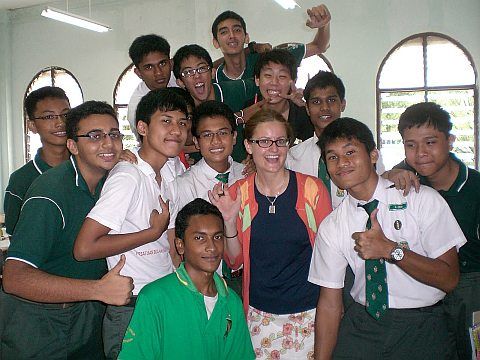
An American teacher on a two-week exchange programme in 2010 comes to teach at St John's Institution, a traditional boys' secondary school in the middle of Kuala Lumpur (see also next two items). She "witnessed several canings" in her first two days, and says the boys can be caned for not following the dress code. "I am constantly reminded of my ethnocentrism or lack of awareness of cultural differences".
Should Public Caning Be Allowed In Schools?
The writer of this 2006 piece was educated at St John's Institution in Kuala Lumpur (see previous and following item), where "caning was neither spared nor frowned upon". He and his schoolmates have turned out successful and not psychologically handicapped, he says. In his view, psychologists and mollycoddling parents are doing a great disservice to pupils by their opposition to CP.
A tribute to you
More detail about CP at St John's Institution (see previous two items), from a student there in 2008. In addition to canings at assembly, the teachers "even offer extra caning when you don't finish your work".
Mimisyamimi's world
Blog by a new teacher (2009) in Kelantan (one of Malaysia's very Islamic northern states). She discovers that every morning there is a disciplinary assembly at which public canings are dished out. Most of the male teachers carry a cane around, she says.
Two strokes of the rotan for each subject that you failed
Reminiscences of boarding-school life in the 1970s. Canings in the principal's office were broadcast by loudspeaker to the whole school "with the microphone placed strategically next to your bum". The culprit had first to announce his name and offence and say his repentance. "The whacking sounds would soon reverberate throughout the school."
 Shut Up! Or I give you Borang C!!!
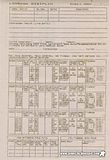
Recollections of Chung Ling High School, Penang, in 1995. "Borang C" (Form C) is a printed form on which school discipline cases are entered. If the offence is serious enough, "you will definitely get your ass caned by Mr Ar Bak". The form itself is reproduced. The punishment options it lists under "Tindakan" (action taken) include warning, apology, detention, police, and "Cane 1", "Cane 2", "Cane 3" and "Cane more than 3" (referring to the number of strokes).
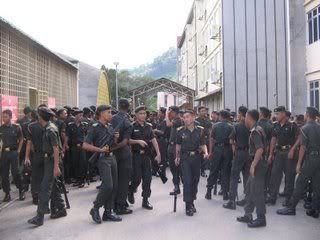 The Life of an ex-Senior Putera
Scroll down to "Reasons why this month sucked". A 17-year-old student at the Royal Military College tells us that he got a five-stroke caning from the DOS (Director of Studies) in his very last month there (Dec 2006). The cane must be wielded vigorously at this elite army boarding school, because immediately after being punished the student is sent by ambulance for a medical checkup. However, he says, "happy to say no long lasting damage to my buttocks".
The School of Hard Knocks (Alternative link)
A former pupil of the huge Setapak High School recalls that every Friday was public caning day in the assembly area. This consisted of "getting one's ass whipped in front of a few thousand people". It hurt, and dozens of misbehaving students got it every week, he says.
The Frangipani Tree
V. Chakaravarthy, a student of Dr G.E.D. Lewis at the Victoria Institution (see following item) in the 1950s, later himself became a headmaster, running Setapak High School (see previous item) in the 1980s. Inspired by Dr Lewis's example, he writes that he got rid of thuggery at Setapak by "facing up to the culprits with firmness and liberal use of the cane".
Club 21 for merit
Part of a website about the history of top Kuala Lumpur boys' school, the Victoria Institution. Club 21 was formed there to counter gangsterism in the 1950s, and any gangsters identified received "six of the best" from the headmaster. And in the memoirs of the headmaster in question (Dr G.E.D. Lewis) he gives his own account of these punishments.
The Razzler: Reunion Gathering & Public Caning
A Malaysian recalls getting 3 strokes of the rotan in front of his school.
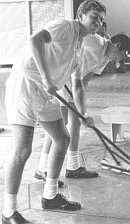 RAAF School Penang: Discipline
Arguably I should list this school under Australia: it was for the offspring of personnel at an Australian air force base in Malaysia. Four punishment book pages from 1979 to 1981 are reproduced, in which the culprits are aged up to 16 and the canings described as "cuts". There is also a 1981 letter from the Assistant Principal authorising two other members of staff to use corporal punishment, and a poem from the 1960s ("... the thwacking and the cracking of the long canes whacking ..."). The school closed in 1988.
More information and links for School CP in Malaysia: see Country files.
 MALTA
MALTA
Norman's agenda
Interview (2005) with a prominent broadcaster who recalls getting strapped at a boarding school run by Jesuits, St Aloysius College.
 NAMIBIA
School Beatings Cause Outcry
"We are just giving them a lash or two, we are not really beating them", says the principal of a Windhoek high school accused of illegal corporal punishment in this March 2005 news item.
More information and links for School CP in Namibia: see Country files.
 NETHERLANDS
National School Museum
How were children punished 400 years ago? Point your mouse at the animated paddle to find the answer.
 NEW ZEALAND
NPBHS Boarders Tales: Prefects and Punishments
Stories from New Plymouth Boys' High School in the 1960s.
A New Zealand school openly flouted corporal punishment law for years and no one cared
Article about a Christian fundamentalist school that carried on spanking after CP was made illegal.
The Notch
Reminiscences of Auckland Grammar School, c.1960, where every master had a cane and, in a school of a thousand boys, there were a few canings each day. "You had to bend over with your hands on your knees", and the result was "a searing pain across the backside". The "notch" in the title refers to the practice of cutting a notch in your belt for every caning you received -- a custom also detailed in the Joseph Mercurio book.
Means to an Enz for Tim
Tim Finn, former frontman of 1970s rock group Split Enz, says he got 35 canings in one year at his NZ Roman Catholic boarding school in the 1960s.
Centenarian set on WBHS jubilee
Article in the Whangarei Northern Advocate about a 101-year-old visiting his old school, where in 1917-1918 a standard punishment was "six whacks on the bottom with a cane".
Caning log book resurfaces at WHHS
Rotorua Daily Post news story (March 2006) about the discovery of an old punishment book at a local high school. One recipient of the cane was the present deputy principal, who says it taught him self-respect and to respect others. "It was suitable for the era but that era has gone", he claims.
What About Us? Boys in Schools and Men in Society
The author of this 1999 essay asserts that boys and men are now, as a result of the feminist revolution, heavily discriminated against in society -- and, looking at some of the examples he quotes, he does seem to have a point. In schools, he adds, the banning of corporal punishment may be a factor. In his experience as a teacher, CP had "a salutary effect on the behaviour and attitude of some boys", a benefit now denied to them, leading to a great increase in suspensions, the vast majority of which involve boys, to the obvious detriment of their education.
Convent Kid (Alternative link)
Scroll down to "Sister Berchmans' class". The author says his record for the number of 'cuts' received was 16 in one week, around 1960.
James Speight 1837-1912 (Alternative link)
Mixed views of this "flogging headmaster". The North Canterbury Education Board's 1894 punishment regulations are quoted. These outlawed canes and sticks, substituting a strap (dimensions quoted).
Psychological devastation caused by corporal punishment
This is a classic case of a clearly neurotic person with a lot of problems projecting them all on to a perceived single "cause" in childhood -- the strappings and canings he received and witnessed at school sound rather tame, but are now blamed for everything that has gone wrong with his life ever since. Ordinary common sense tells us that there must be a lot more to it than that. One doesn't want to seem unsympathetic but I do think this fashion for people doing their psychotherapy in public is rather regrettable.
An interview with the Rector
The Rector (= Headmaster) of Waitaki Boys' High School admits to having been in the past a "conscientious caner". He describes arriving there in 1964 and being provided with a bundle of canes, which he used "when it was necessary". Boys, he says, "generally responded well to caning and discipline was in fact easier". How bizarre, then, that he goes on to oppose its reintroduction "in today's environment" on the grounds that it is "quite rightly regarded as physical assault". This is called having your cake and eating it. Either he was wrong at the time and the law is now right, or he was right then and the law is now wrong. What happened to integrity, and having the courage of one's convictions?
Old Boys' Association
Also from Waitaki Boys' High, an anecdote about a teacher who maintained that there was nothing like the cane for building character in a boy.
Kaitieke School: School Discipline
Essay by a present-day Year 8 student calling for a return to more effective methods of punishment. Describes the canings and strappings in use "back when our parents went to school".
Canes, Berets and Gangsta Rap: Disciplining Sexuality in School, 1920-1995
Long paper for a symposium about Woman Educators, but there are interesting anecdotes, quotations and discussion about, among much else, practices and traditions in the caning of schoolboys (mostly by Male Educators) and its place in the New Zealand culture of masculinity. (Echoes here of the Joseph Mercurio book, which indeed is cited as one of the references.) There is also quite a bit about the question of single-sex vs. coeducational schools. I found the whole thing well worth reading, in spite of occasional bits of feminist sociological jargon. It seems to me that much of what the author has to say could apply equally well to certain other cultures, especially Britain.
More information and links for School CP in New Zealand: see Country files.
 NIGERIA
Morning Assembly in Toro
VSO teacher volunteers report on public floggings in school assembly.
I grew up on the streets
Interview (2004) with Senator Adeseye Ogunlewe, who recalls when misbehaving students were called out in morning assembly and given six strokes of the cane in front of the school. He thinks this was very beneficial in keeping him on the straight and narrow.
An unforgettable early experience at BBHS
Describes both witnessing and receiving public canings at Baptist Boys' High School, Abeokuta, in the 1980s. One student was allegedly given the choice of expulsion or 36 strokes, and chose the caning, taking all 36 without tears.
A day in the life of an ex-boarder
More recollections about Baptist Boys' High School (see previous item), this time from the 1990s. The writer was pulled out of his bath by a prefect, who gave him four strokes of the cane while his body was still dripping water.
The Singapore solution
Mentions the Nigerian practice of "flogging day" when students receive corporal punishment in front of the entire school for accumulated demerits, and suggests something similar would be a good idea in the USA: immigrant kids there "are more terrorized by the disorder in their inner-city American schools than they were by the threat of corporal punishment in schools back home".
 PAKISTAN
See Country files.
 PERU
PERU
The Incas
According to this, the sons of Inca nobles were disciplined during their education by caning, up to ten blows a day on the soles of the feet. This once again disproves claims that corporal punishment was a purely European import.
 PHILIPPINES
The Gloria in our lives
Recollections of a private school for boys at which all were ruled by the "paddle of love".
 POLAND
See Country files.
 ST VINCENT & THE GRENADINES
Teachers
The second item down the page, next to a picture of a former headmaster of Boys' Grammar School, is an anecdote from the 1960s about a student getting out of the remaining strokes of his caning by means of a trick involving Enos fruit salts.
More information and links for School CP in St Vincent and the Grenadines: see Country files.
 SEYCHELLES
UN Committee on Rights of Child concludes thirty-first session
This 2002 report contains an ambiguous sentence which might mean that CP in schools had been abolished in the Seychelles, or only that the government was committed to doing so.
 SIERRA LEONE
Back to Bo
A Western visitor reports (March 2010) that corporal punishment is widely used in Sierra Leone schools -- "cuts" with a cane on the seat of the pants, for girls as well as boys.
 SINGAPORE
Guys of r/Singapore, have you ever been caned publicly in schools? If so, what was the offence? How did you feel before, during and the aftermath?
Singaporeans recall their school canings.
On the Stand: Thomas Titans
Review of a novel featuring a thinly disguised version of the elite all-boys school Raffles Institution (RI). The review was written in 2012 by a recent graduate of the school, who informs us that at that time the cane was still in use at RI, but only in secondary years 1 to 4; it was "felt that Year 5-6 students were too old for such an arcane punishment". He also notes that the last recorded public caning (i.e. in front of the whole school) took place in 2008.
 St Patrick's School, Singapore: An Album of Past Images
Includes a reminiscence from the 1960s, when discipline was very strict (actually it still is): "The caning left marks on their bums for years"! No doubt this is an exaggeration. The author (pictured right) does not tell us whether he received it himself.
Having stead is a offence in secondary school?
School pupils discuss on a message board (Apr 2008) the case of a boy and girl caught holding hands ("public display of affection" or PDA). It was away from school premises, but the boy's Discipline Master (DM) threatened to cane him. Most of the contributors think this excessive, but some suggest it depends whether or not the students were in school uniform.
Won over by bilingual education system
 Straits Times report (Dec 2006) about a Korean woman who took her son and daughter to live in Singapore so they could benefit from education in English and Mandarin. She is "horrified", however, to discover that Singapore schools use public caning as a punishment, and asserts, bizarrely, that this would never happen in Korean schools. People's ignorance about the conditions in their own country never ceases to amaze. There was at that time probably at least as much school CP in South Korea as in Singapore. It may be true that Korea did not much go in for caning as a formal ceremony in front of the whole school, but there was certainly caning in the classroom and sometimes even outdoors within the view of the general public.
The Infusionz Blog
Blog by a 22-year-old. Scroll down to 23 September 2003. His 15-year-old brother had just received a caning for forgetting to bring his PE kit. The elder brother wasn't against CP for serious offences, but he thought this was over the top.
CPSR-Global Digest 993
A school principal, asked how she keeps students away from internet porn sites, says "I have a strong cane".
More information and links for School CP in Singapore: see Country files.
 SOUTH AFRICA
Durban High School Class of 1961
Numerous references to CP in this collection of documents about an elite school for English-speaking white boys. On one occasion the entire cricket First XI, having been found smoking, were made to bend over on stage in front of the whole school for "six of the best" from the headmaster's cane.
Which teacher gave the hardest jacks in your day?
Memories of canings at Muir College High School, Eastern Cape, in the 1980s and 1990s.
School days
Author Wilbur Smith recalls 1940s Cordwalles boarding school in Natal, and then Michaelhouse Academy, with canings at both.
Clifton School
Wikipedia article on this boys' school in Durban. In the 1950s, 1960s and 1970s the headmaster "caned hard and often, famously leaving welts that lasted two weeks or more", according to this.
Education and Socialisation
A "baby boomer" intellectual thinks (2008) that "back in the days before the advent of invasive political, psychological and sociological theorising into every aspect of our lives, we actually didn't do too badly". He recalls headmaster's canings which had an educative effect, and wonders why western society has suddenly decided to overturn thousands of years of experience. A well-written and thought-provoking read.
Making Sense of the Values Discourse Among School Stakeholders
A survey found that 78% of educators felt that the government had put too much emphasis on "children's rights" and this led to problems with school discipline. 46% stated that the ending of CP had reduced their ability to teach effectively.
Eddie Kramer Never Stops
Music soundman Eddie Kramer remembers his 1950s education at South African College High School, modelled on an English "public" school, with straw boaters and blazers. "It was very strict. You got caned on the ass if you misbehaved."
Abbott takes it in his stride
Interview (2005) with England rugby star Stuart Abbott, who recalls canings at age 16 and 17 at Bishops, an Anglican school in Cape Town, in the 1990s. He was punished for "all kinds of stuff", and tried to get away with wearing five or six pairs of underpants. He thinks it was a good punishment because it only took a few minutes. There was also fagging. This, the author notes, was an education more traditionally English than most of the English members of the present England team experienced.
Spare the rod?
Severe canings at a High School in 1974 are recalled. A list of boys to be disciplined was read out every day on the school tannoy, and at break time these students had to report to "The Armoury", where two teachers were waiting to administer the punishments, which the writer here describes in detail. He notes that now, with CP outlawed, thuggery is rife in schools, while teachers cower in their staff room.
School of Dope
A teacher at a high school in Bloemfontein describes (in 2006) his day: noise, disruption, lying and cheating, students paying more attention to their phones and MP3 players in class than to the teacher, and walking out of class on a whim. This, he says, is the reality of teaching in a world without corporal punishment.
No skates here -- just pupils with passion
Durban Daily News article (2003) about a 28-year-old skateboarder who recalls his headmaster in Johannesburg "applying the cane to his ass".
Pupil forces principal to dance to his tune
News story from October 2003 about a schoolboy banned by his headmaster from going to a dance. Somehow this piffling affair reached the courts, where the judge commented that if corporal punishment was still allowed the problem would have been solved.
ANC Daily Newsbriefing, 30 April 1995
About a quarter of the way down this long page, a feature on the beginning of the campaign to abolish school CP.
Don't drink the water
A "day in the life of" piece about a schoolteacher who had a nasty experience after caning several children for pouring urine into the teachers' drinking water tank.
I was surprised by teachers' primordial urge for violence
A columnist in Business Times reminisces (1998) about his school whackings.
One hundred of the best
Introduction to a 1998 series of Sunday Times articles about schools in the new South Africa. Some were still battling to find alternatives to the cane, by that time banned.
Get to grips with the best of both worlds
Article from the above series, about a rural high school. Caning of course had been abolished, but the principal missed it, and said some boys asked for it.
Discipline sets a record of achievement
Another article from the same series. This is about a high school in Soweto which achieved high standards with strict discipline in unpromising conditions. The principal admitted to occasional illegal use of corporal punishment, with parental support.
More information and links for School CP in South Africa: see Country files.
 SOUTH KOREA
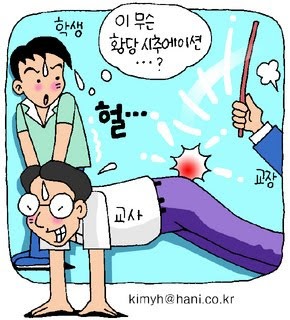
Corporal punishment
Long blog post by a Canadian teacher in South Korea (2011) who had mixed feelings about the then imminent banning of the punishment stick in schools there. Very interesting discussion of different points of view.
Have Stick Will Use It
An expat Brit teacher in South Korea notes (2010) how much better behaved the students are than in the "shit schools" where he taught in Britain. He describes the use of his stick "Billy" in helping to maintain this state of affairs.
Corporal Punishment in School: A Review of the Pros and Cons [PDF]
Opinions of teachers and an assessment of the effects of CP (2005).
Questioning student rights
An editorial in the Joong Ang Daily (2010) takes a very dim view of school students who claim to have rights and object to CP and school rules.
Corporal punishment being replaced by 'self-reflection rooms'
See page 14. Translation of a Korean news article (2010) about the unsatisfactory consequences of the then new ban on school CP in Seoul. See also this Sep 2010 news item.
Korea's New School Of Thought
Article (2007) in Business Week notes that at the time there were schools where students get caned in front of their classmates for poor work.
 Spirit of Jeet Kune Do: Once Upon A Time In A High School
Review of a film set in 1978 in a school "notorious for harsh corporal punishment". The director wanted realism, so "two male leading characters had no choice but to endure the pain of actually getting spanked with an aluminium baseball bat".
A Memory in One's School Days, A Whip of Love
From the English magazine of Cheju National University, a pair of articles pro and con school CP (2005). The writer of the anti-CP piece says that over-the-top punishment was sometimes given by angry teachers. The pro-CP contributor, on the other hand, argues that it is an act of love to inflict physical pain on defiant students so that they will develop an attitude of respect.
Corporal punishment in schools
Long thread (2007) on a message board for foreign expats working in Korea, many of whom are teachers. There are robust views on all sides.
The Understanding Teacher
A former high school student pays tribute to his considerate teacher, Mr Park Jin Yong, who spanked him and a group of his friends instead of referring them for suspension after they were caught playing basketball when they were supposed to be studying.
No Longer a Kids' Game
A father goes to a meeting for prospective parents at a local private school (2003) and is surprised to learn that students would be disciplined with corporal punishment.
100th Anniversary of the Birth of George Orwell
This article (2003) noted, in passing, that school students with cameras in their mobile phones were now secretly filming their teachers inflicting corporal punishment. (And indeed they were: see for instance these video clips).
Corporal punishment. The long of it. Also most of the short.
See in particular the comment by Jay, a student who is accustomed to bending over for his teacher's "Stick of Love". Much further down the page is a long and heated discussion from which it seems clear that "swats on the butt" were then (2002) very much the norm in South Korea.
Ideas and Ideals: Corporal Punishment
In 1998 the Ministry of Education issued a special order (quickly revoked) forbidding teachers to use CP. Teachers were described in this 1999 essay as being very unhappy about it.
More information and links for School CP in Korea: see Country files.
 SRI LANKA
The E.C. Gunasekera Inaugural Memorial Oration by Lalanath De Silva, LLM
Recollections of canings at Royal College in Colombo.
School bullying epidemic in Sri Lanka
1998 news item about an entire class being caned by prefects.
 SUDAN
SUDAN
UN Committee on Rights of Child concludes thirty-first session
CP was widely practised in Sudanese schools, according to this 2009 report.
 SWEDEN
The History of Tensta Gymnasium
In the 17th and 18th centuries, corporal punishment at this school was administered with bundles of twigs that the students themselves had to collect and tie together.
Changing concepts of grammar school teacher authority in Sweden 1927-1965
This rather heavy-going academic paper states that teachers' power to administer corporal punishment was removed by legislation in 1928, but not all teachers accepted this at the time.
 TAIWAN
Learning English Issue 31
JacksonFive Reference: Corporal Punishment
Debate pro and con between students of English, some of whom are themselves teachers who use CP.
 TANZANIA
Corporal Punishment and the Disco Fiasco
Life at Songea Boys' Secondary School, as reported by an American Peace Corps volunteer (2011). CP, typically three to five strokes with a fimbo (switch), takes place on a daily basis. 18-year-old "A" level students are not exempt. The discipline master requires those due for punishment to kneel on the ground with their hands behind their heads, and summons them up one by one to bend over. This takes place in morning parade in front of the school, but also at other times of day as required.
 THAILAND
Just Beat It
A foreign teacher of grades 7 to 9 complains (2003) that the students are out of control, until one of the Thai teachers comes along and spanks a boy.
Your views on Thailand's schools (Alternative link)
A BBC message board produces differing opinions on the Thai education system. Several contributors note that at the time (2005) corporal punishment was still widespread.
More information and links for School CP in Thailand: see Country files.
 TRINIDAD & TOBAGO
 The Abbey School, Mount St Benedict, Trinidad
Don Mitchell CBE QC claims that at this secondary school in the 1960s he was prepared to take six strokes of the cane on his backside every Monday morning for five years rather than have to play cricket.
Education Minister paves new road to hell
Columnist recounts (2001) his own experience of receiving CP and takes an extremely dim view of the government's move to ban it.
School violence nothing new
'Badjohns' who spawned today's criminals
The same columnist (2003) expands on his argument (see previous item).
 UGANDA
Kids speak out on indiscipline
2005 newspaper article in which some young students give their views. Several recommend that disobedient pupils should be caned.
Behind the Mask: Uganda
News item (2003) about an 18-year-old schoolgirl who was caned in front of the whole school for having a lesbian affair with another girl.
From Caning to Campaigning
A young politician returns from his US college to Uganda, where in the 1980s he was caned regularly for being late to school.
More information and links for School CP in Uganda: see Country files.
 UNITED KINGDOM
See this separate page.
 UNITED STATES
See this separate page.
 YEMEN
YEMEN
Ouch!! Corporal Punishment and Other Means to Rein In Unruly Students
Article (1997) from the Yemen Times. Caning was said to be prevalent.
 ZIMBABWE
Prince Edward School: Chalkdust Jan/Feb 1998
Reminiscences of this famous Harare boys' school. In an example of local schoolboy terminology that I had not come across before, getting caned by the headmaster while bending over the back of his chair (described here in the 1950s and 1960s -- scroll down to "Correspondence") was called "being dooked" and strokes of the cane were known as "dooks".
Prince Edward School: Chalkdust Feb/Mar 1997
More on "dooks" at "PE" (see previous item), here written as "docks", which might be a misprint. According to one correspondent (scroll down to "Book borrower"), in the 1940s these "were administered with a light cane precisely across the buttocks, always at exactly the same horizontal position over khaki shorts leaving a single and painful welt, despite the number of strokes received".
More information and links for School CP in Zimbabwe: see Country files.